
On October 4, 2026, at the National Convention Center in Hanoi, under the direction of the Ministry of Science and Technology and the State Bank of Vietnam (SBV), the Banking Academy of Vietnam (BAV), in coordination with the National Agency for Technology Entrepreneurship and Commercialization Development, organized the 2026 Innovation Forum in the Finance and Banking Sector under the theme “Unlocking Resources for Innovation.”
The Forum was a specialized event held as part of the series of key activities marking the National Innovation Day 2026. SBV Deputy Governor Pham Tien Dzung attended and delivered the opening remarks.
The Forum was attended by representatives from various SBV units, the Department of Innovation under the Ministry of Science and Technology, the leadership of the Banking Academy of Vietnam, representatives of commercial banks and businesses, as well as scientists and experts in technology, finance, and banking.

Deputy Prime Minister Ho Quoc Dzung and SBV Deputy Governor Pham Tien Dzung, together with other participants, visit exhibition booths at the Forum
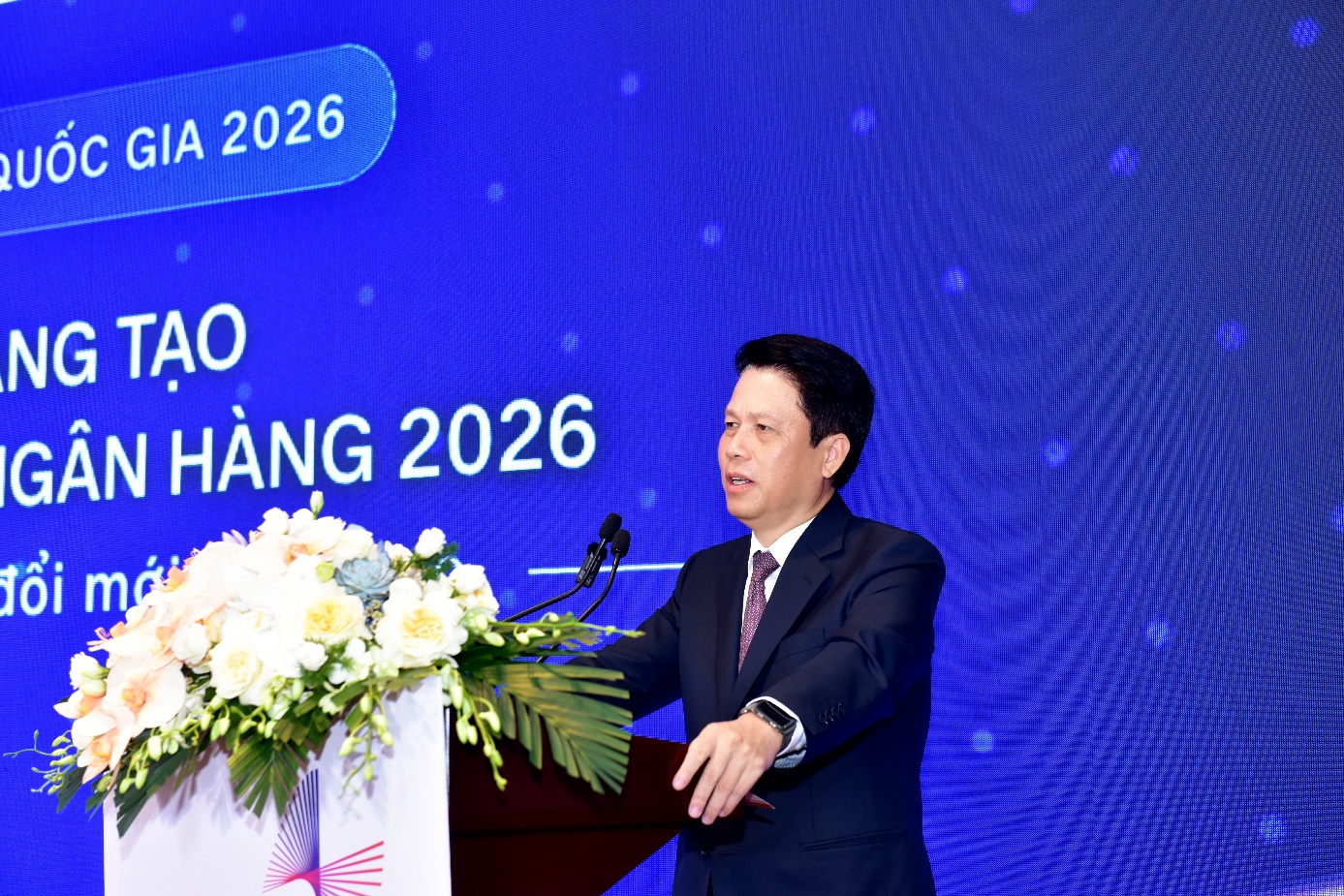
Deputy Governor Pham Tien Dzung delivers the opening remarks at the Forum
In his opening remarks, Deputy Governor Pham Tien Dzung said that, in implementing the Party’s guidelines, State laws, and the Government’s directions, the banking sector had proactively translated these orientations into specific programs and action plans. These included strengthening the Steering Committee on Science, Technology, Innovation, Digital transformation and Project 06; issuing the Banking Industry Digital Transformation Strategy through 2030; and accelerating the review and revision of regulations to remove obstacles to digital payments, digital banking, and electronic lending, alongside efforts to reduce and simplify administrative procedures.
According to Deputy Governor Pham Tien Dzung, the banking sector has achieved important initial results across a number of areas. In terms of institutions, infrastructure, and innovation capacity, the legal framework for innovation in banking has been gradually improved, while payment and data infrastructure has continued to be modernized, promoting cashless payments and cross-border QR-code payments. Banking security and safety have also been strengthened through customer data cleansing, biometric verification, and connectivity with the National Population Database, helping prevent fraud and scams.
Innovation capacity across the banking sector has also improved, with greater adoption of artificial intelligence, big data, and other emerging technologies. At the same time, banking institutions have played an increasingly important role in providing human resources, knowledge, and policy advice.
Deputy Governor Pham Tien Dzung called on participants to identify priority areas for innovation and determine and mobilize the necessary resources, ensuring that innovation is practical and effective, contributes to higher labor productivity, and supports Vietnam’s goal of achieving double-digit economic growth. He also emphasized the need to translate innovative ideas and solutions into practical products and services that create value for people and businesses.

Speakers at the Forum
At the Forum, speakers and experts discussed a central question: how to ensure that the economy’s financial resources are effectively channeled into innovative entities, at the right place and at the right time. Their presentations and discussions highlighted the significant achievements made in innovation, science and technology development, and digital transformation in the banking sector, while identifying existing challenges and proposing solutions and recommendations for the period ahead. These efforts are expected to contribute to the realization of national digital transformation objectives.
At the sessions, Mr. Hoang Minh Tien, Deputy Director General of the SBV Information Technology Department, said that the banking sector had gained valuable experience in connecting to and leveraging the National Population Database. As of the end of September 2026, nearly 175 million individual customer records and nearly 3 million institutional customer records across the banking sector had been verified against the National Population Database, including biometric information.
This demonstrates that, with an adequate legal framework, reliable data, and appropriate connectivity mechanisms in place, data can be leveraged on a large scale across the banking sector, enabling the development of new products and services and enhancing the customer experience.
According to Director General of the SBV Information Technology Department, the banking sector will continue to coordinate with Ministries and agencies to study and develop mechanisms that allow credit institutions to connect to and leverage data sources for banking operations, including data on businesses, science and technology enterprises, and other relevant data sources, in accordance with their functions, authority, and applicable laws.
Regarding data safety, security, and protection, Mr. Hoang Minh Tien emphasized that data sharing must be carried out for clearly defined purposes and with customers’ consent. Access to shared data must be subject to appropriate controls, limited to the data necessary for the intended purpose, and capable of being monitored and traced.
According to the report, by the end of 2025, more than 88.9% of Vietnamese adults had bank accounts, while the value of cashless payments was equivalent to 28 times GDP. At many commercial banks, more than 95% of transactions were conducted through digital channels.
In the first eight months of 2026, Vietnam recorded more than 21 billion cashless payment transactions, with a total value of nearly VND 261 quadrillion, representing year-on-year increases of 34.56% in volume and 13.26% in value. The Interbank Electronic Payment System processed more than 109.1 million transactions worth over VND 400.6 quadrillion, while the Financial Switching and Electronic Clearing System processed more than 9.65 billion transactions.
The SBV has established bilateral QR-code retail payment connectivity between Vietnam and several countries, including Thailand, Laos, Cambodia, China, South Korea, and Singapore, and is working to establish connectivity with a number of other countries.
The State Bank of Vietnam's Payment Fraud Management, Monitoring and Prevention Information System (SIMO) has connected 147 credit institutions and payment intermediaries for data sharing. The service for querying potentially fraudulent accounts has been deployed at 16 banks and 5 payment intermediary organizations. As of September 21, 2026, the service had issued alerts to more than 5.4 million customers, of whom more than 1.8 million had suspended or canceled transactions totaling over VND 6,000 billion.
Translated by Minh Khang