
Within the framework of the ASEAN Cooperation Master Plan 2026, Deputy Governor Nguyen Ngoc Canh of the State Bank of Vietnam (SBV) and Deputy Governor Filianingsih Hendarta of Bank Indonesia (BI) co-chaired the 31st ASEAN Senior Level Committee (SLC) on Financial Integration Meeting in Boracay, the Philippines.
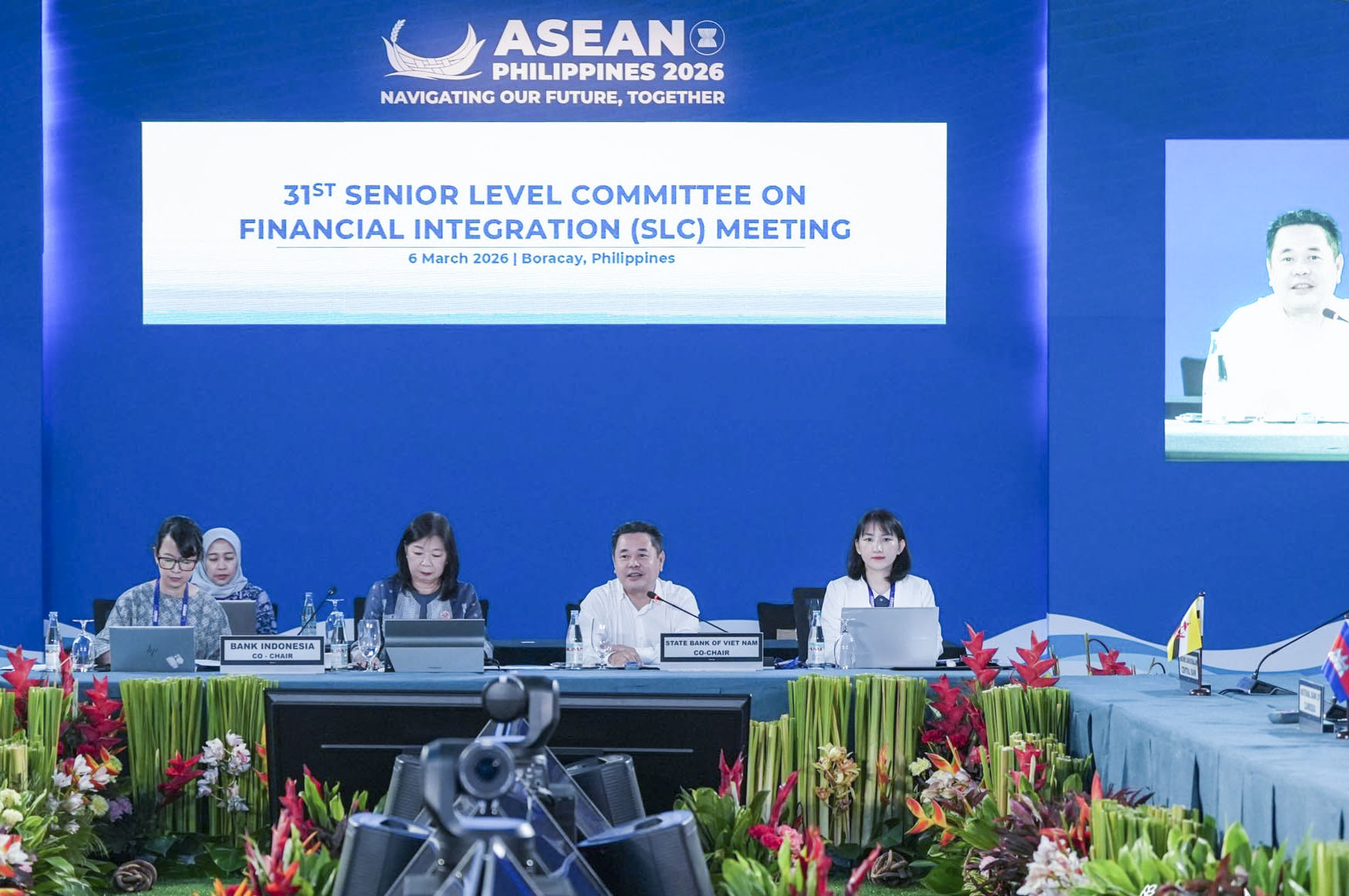
SBV Deputy Governor Nguyen Ngoc Canh and BI Deputy Governor Filianingsih Hendarta co-chair the 31st SLC on Financial Integration Meeting.
In his opening remarks, Deputy Governor Nguyen Ngoc Canh emphasized that the 31st SLC Meeting was taking place at a time when the region and the world are facing numerous uncertainties and increasingly rising geopolitical tensions. Factors such as global economic volatility, the rapid development of artificial intelligence, and transformations in the financial systems are creating not only new challenges but also opening up countless opportunities.
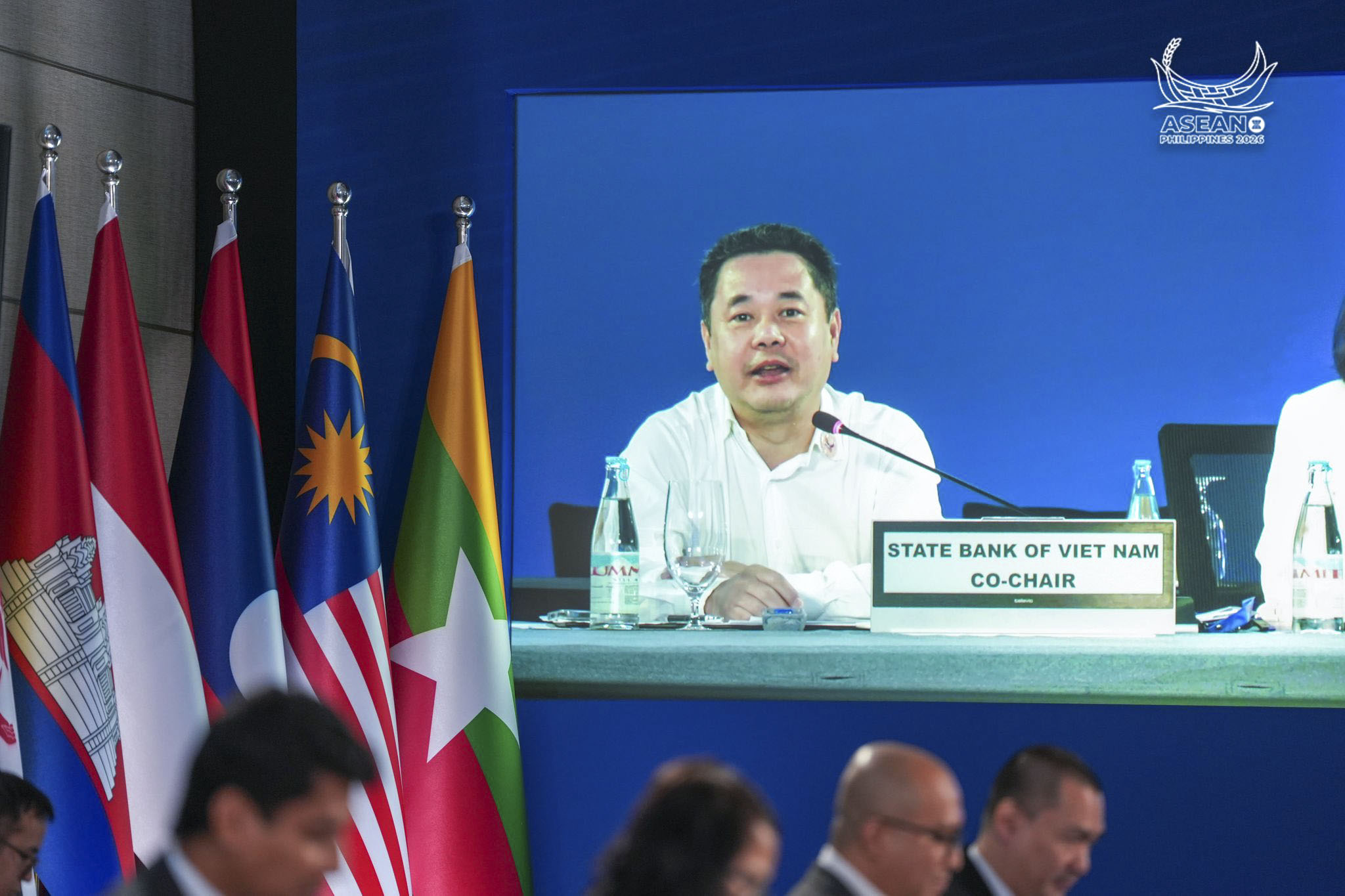
Deputy Governor Nguyen Ngoc Canh delivers his opening remarks at the 31st SLC on Financial Integration Meeting.
Policy dialogue among ASEAN central bank deputy governors and international organizations on the regional and global macroeconomic situations and outlook
At the discussion session on macroeconomic developments within the framework of the 31st SLC Meeting, the ASEAN+3 Macroeconomic Research Office (AMRO) provided positive updates on the region’s economic performance. Accordingly, ASEAN’s growth in 2025 reached 4.8%, exceeding the forecast of 4.3%. This outcome was largely driven by two key factors: lower-than-expected impacts of tariffs and strong demand from the technology sector, together with solid support from strong domestic demand and steadily increasing investment flows.
Looking ahead to 2026, AMRO assessed that ASEAN’s short-term growth outlook may face several unpredictable risk factors. ASEAN central banks are expected to encounter challenges in conducting monetary policy as regional economies continue to deal with risks and uncertainties. However, AMRO still maintains a positive outlook for ASEAN economies, particularly in the areas of technology development and regional investment.
At the meeting, Mr. Chad Steinberg, Deputy Director of the IMF's Asia and Pacific Department, presented an overview of the global and regional economic situation. The IMF projects that global economic growth will reach 3.3% in 2026, while the ASEAN-5 economies (Indonesia, Malaysia, the Philippines, Singapore, and Thailand) are expected to grow by 4.2%. However, the ASEAN region continues to face several challenges, including rising global imbalances and increasing public debts. The IMF recommended that ASEAN governments focus on reducing policy uncertainties and implementing fiscal consolidation measures in the short term.
In the long term, stronger structural reforms are needed to promote sustainable growth, particularly through the application of digital technologies and the development of domestic bond markets. Despite existing challenges, the IMF highlighted that opportunities arising from the development of artificial intelligence and the potential easing of trade tensions could become important drivers of growth for the ASEAN region.
Updates on ASEAN Working Groups in support of regional banking integration
Within the framework of the meeting, under the coordination of the SBV and BI, the ASEAN Working Groups on banking cooperation reported on the progress of initiatives and activities implemented in 2025, and proposed directions for future cooperation.
Deputy Governor Nguyen Ngoc Canh highly appreciated the efforts of the Working Groups in implementing the priority activities for 2026 with encouraging results, including: (i) Completion of key targets under initiatives on ASEAN Banking Integration, Capital Account Liberalization, and Regional Payment Connectivity as scheduled; (ii) Significant progress in promoting capital account liberalization and enhancing financial inclusion across the region; (iii) Reaching agreement on technical elements related to the upgrading of the ASEAN Swap Arrangement (ASA), laying a solid foundation for expanding and strengthening regional financial initiatives.
These results affirm the progress of financial and banking integration in the region and demonstrate ASEAN’s strong commitment to promoting sustainable development and deeper economic connectivity.
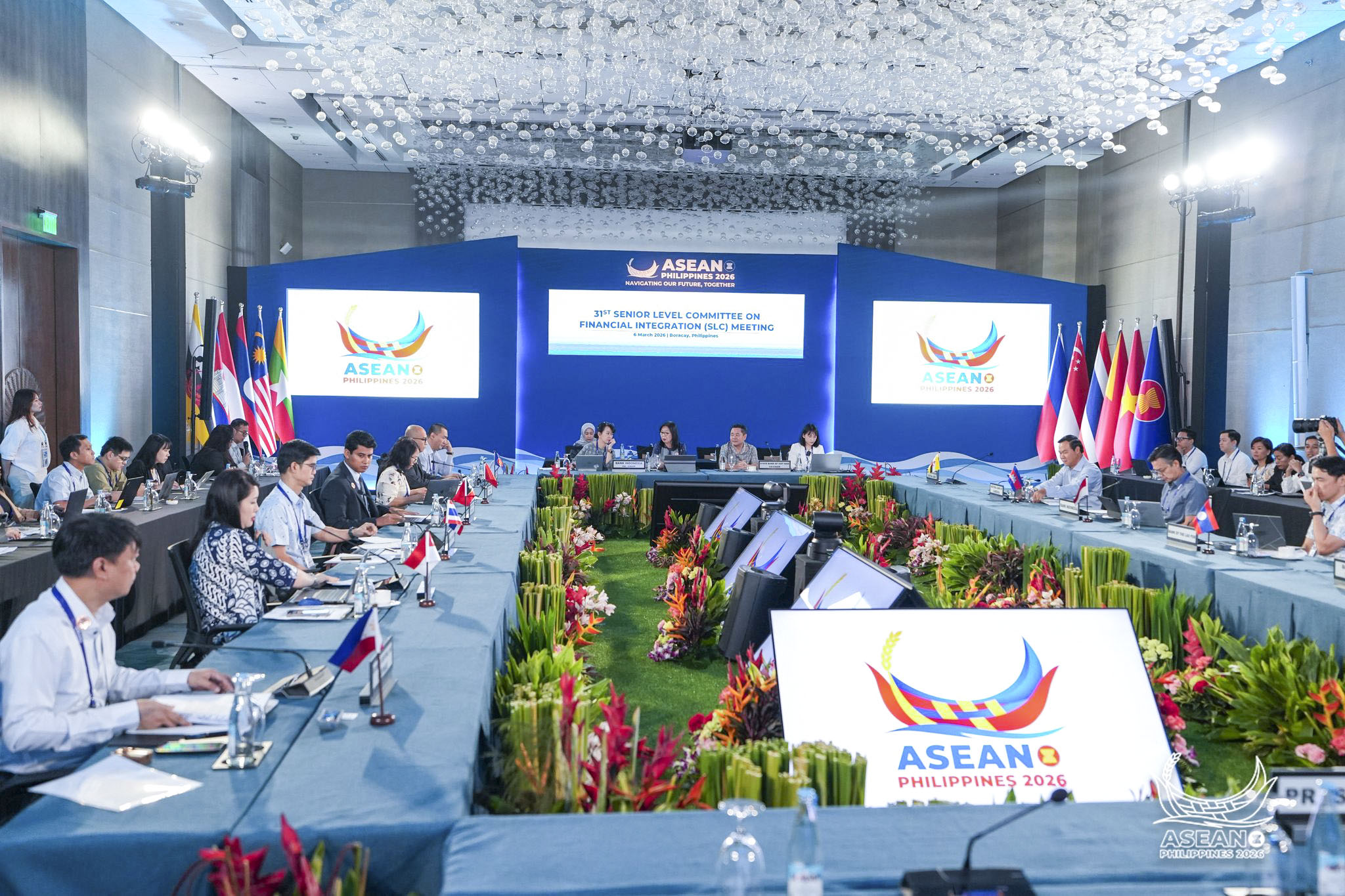
Overview of the 31st SLC Meeting.
Based on the assessments of the Working Groups, the SBV representative, on behalf of the co-chairs of the meeting, presented the ASEAN Banking Sector Risk Monitoring Report (RMT).
Approval of the Comprehensive Reform Project for ASEAN Financial and Banking Cooperation Processes
An important outcome of the meeting was the approval of the Comprehensive Reform Project for ASEAN Financial and Banking Cooperation Processes. In recent years, under the leadership of Bank Negara Malaysia, the Central Bank of Brunei Darussalam, and the Monetary Authority of Singapore, ASEAN members have discussed and implemented this reform project with the aim of reducing overlaps and enhancing efficiency and transparency in coordination. The project focuses on four major orientations, i.e. (i) Streamlining and consolidating approval processes to ensure greater consistency; (ii) Reorganizing existing Working Groups into four major thematic clusters in order to avoid fragmentation of resources; (iii) Strengthening two-way dialogues and more substantive cooperation with external partners; (iv) Establishing a monitoring mechanism to track the implementation of meeting outcomes and ensure regular evaluation. These proposals are expected to be submitted for approval at the ASEAN Central Bank Governors’ and Finance Ministers’ Meetings in April 2026.
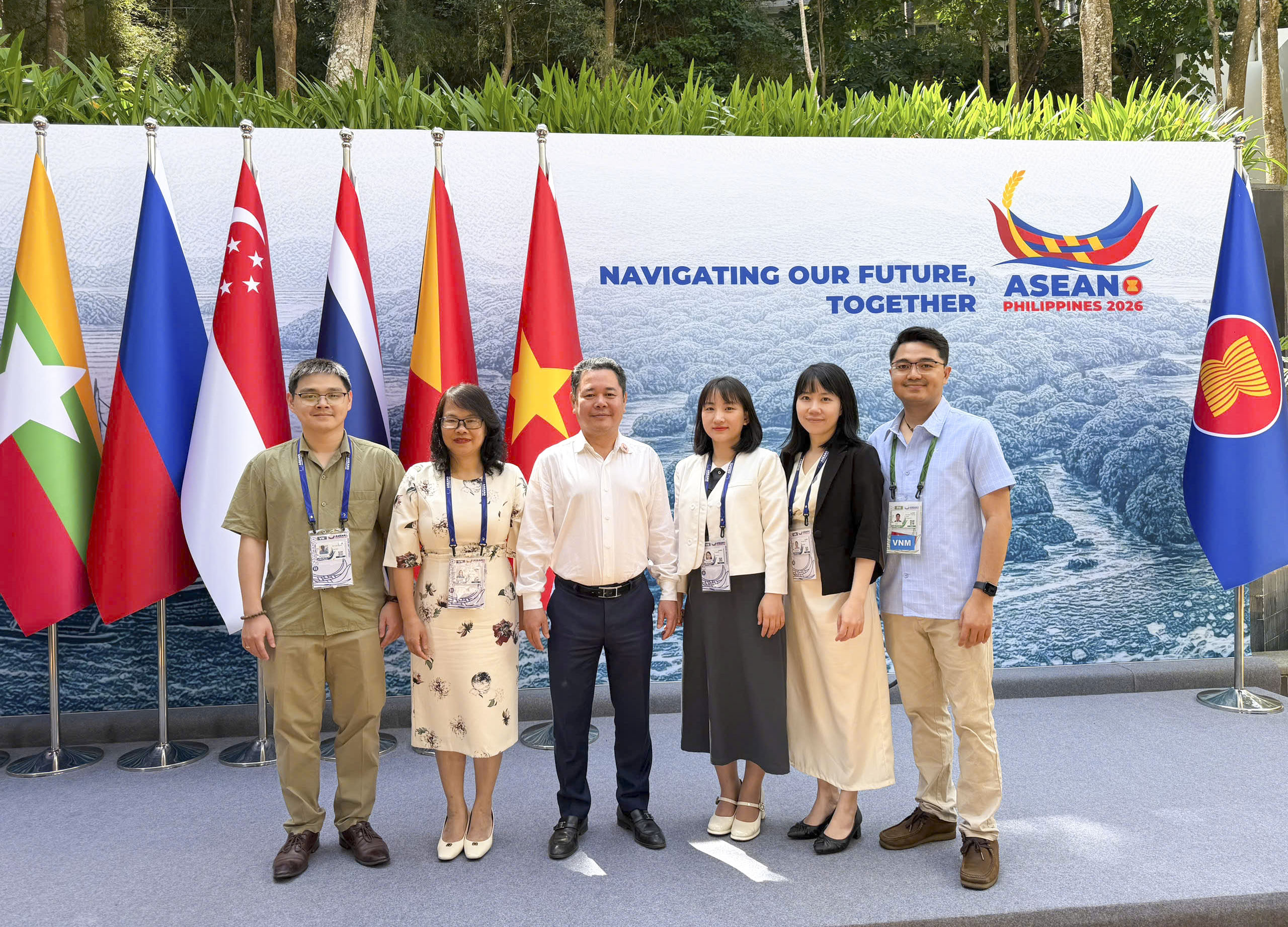
The SBV delegation attends the 31st SLC Meeting.
The 31st SLC Meeting also warmly welcomed the first participation of the Central Bank of Timor-Leste as an official member of ASEAN, and listened to a presentation from its representative on the country’s domestic financial and banking landscape.
Toward the end of the meeting, the Deputy Governors highly acknowledged the active role and contributions of the SBV and BI in promoting and effectively implementing initiatives and cooperation activities within the ASEAN financial and banking framework.
Deputy Governor Nguyen Ngoc Canh also expressed his pleasure in announcing that Vietnam will host the 32nd SLC Meeting in September 2026 and warmly welcomed the participation of all member countries.